perceive / seed
Texture
Surfaces that reward attention
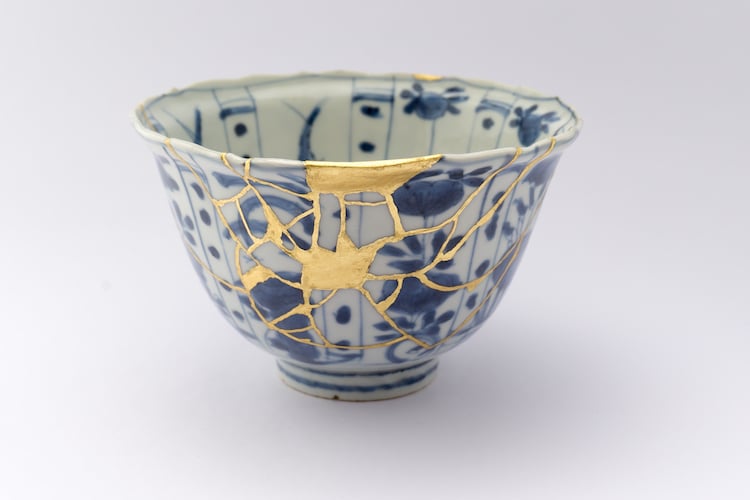
Run your hand across a piece of furniture. Plastic laminate versus solid wood. One surface is dead. The other has grain, variation, depth. The difference isn’t just visual — it’s tactile.
Soetsu Yanagi founded Japan’s Folkcraft Museum in 1936. His 1972 book The Unknown Craftsman describes shibusa: beauty with inner implications. Objects that “balance simplicity with complexity” through subtle details like texture. You don’t tire of shibui objects — their aesthetic value grows over the years as you find new meanings.
Yanagi called Japanese aesthetics “the art of odd numbers.” Greece pursued perfection — the art of even numbers. Japan pursued imperfection. “We in our own human imperfections are repelled by the perfect since everything is apparent from the start and there is no suggestion of the infinite.” This is the same instinct behind wabi sabi and the gold-veined repair of kintsugi: the flaw is where the eye lingers.
Texture is variation at the small scale. Grain in wood. Weave in fabric. Tooth in paper. The micro-irregularities that catch light and invite the hand — a surface that signals how it wants to be touched.
Perfect smoothness reads as artificial. Even “smooth” natural materials have texture — the subtle variation that says this is real, this was made, this exists in the physical world. It is the same legibility a patina gives an old tool: a record of time and use written into the surface.
Digital interfaces are textureless. Every pixel is identical. Efficient but sterile. The interfaces that feel good reintroduce texture:
- Typography with character
- Animations with physics
- Sounds with warmth
- Interactions with resistance
Depth over polish. Texture over smoothness. Reward the people who pay attention.